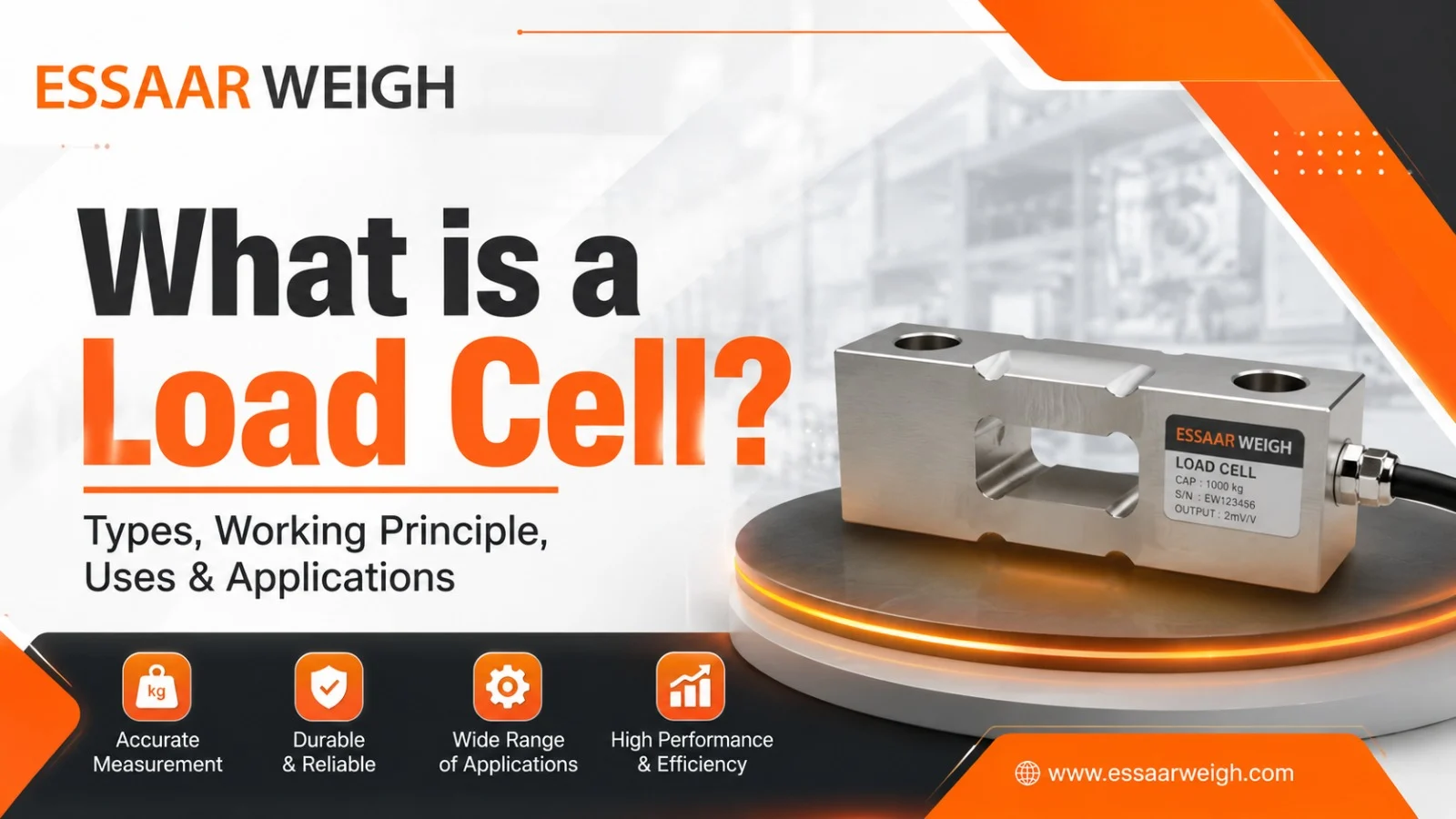
Load Cell is an electronic weighing device used to measure force or weight accurately. It converts the applied load into an electrical signal that can be processed and displayed as a weight reading. Load cells are widely used in weighing machines, industrial scales, weighbridges, hopper weighing systems, tank weighing systems, and various material handling applications.
What Is a Load Cell?
Load cell is a precision weighing sensor that converts force or weight into an electrical signal. It is widely used in weighing machines, weighbridges, industrial scales, hopper weighing systems, and ladle weighing systems to provide accurate weight measurements.
How Does a Load Cell Work?
A load cell works by detecting the deformation caused when a force or load is applied. In the most commonly used strain gauge load cells, strain gauges are attached to a specially designed metal element. When the load is applied, the element undergoes a small change in shape. This change alters the electrical resistance of the strain gauges.
The resulting electrical signal is proportional to the applied load. A weighing indicator or control system then processes this signal and displays the corresponding weight. This principle allows load cells to provide accurate and repeatable measurements in different weighing applications.
Load Cell Working Principle
A load cell works by converting mechanical force or weight into an electrical signal. The main working steps include:
- Load Application: Weight or force is applied to the load cell.
- Deformation: The internal sensing element undergoes a small, controlled deformation.
- Strain Detection: Strain gauges attached to the sensing element detect this deformation.
- Resistance Change: The strain gauges experience a change in electrical resistance.
- Signal Generation: This resistance change produces a small electrical signal.
- Signal Processing: The signal is amplified and processed by a weighing indicator or control system.
- Weight Display: The processed signal is converted into an accurate weight reading.
This working principle allows load cells to provide precise and reliable measurements in weighbridges, industrial weighing scales, hopper weighing systems, tank weighing systems, and ladle weighing systems.
Types of Load Cells
Different types of load cells are used according to the application, load direction, capacity, and installation requirements.
1. Strain Gauge Load Cell
Strain gauge load cells are among the most commonly used types. They use strain gauges to detect deformation caused by an applied load and are suitable for a wide range of industrial weighing systems.
2. Compression Load Cell
Compression load cells are designed to measure force applied vertically or downward. They are commonly used in tanks, silos, hoppers, and heavy-duty weighing systems.
3. Tension Load Cell
Tension load cells measure pulling or tensile forces. They are used in crane scales, suspended weighing systems, and applications where the load is hanging.
4. Single Point Load Cell
Single point load cells are generally used in platform scales and compact weighing machines. They can provide accurate measurements even when the load is not placed exactly at the centre of the platform.
5. S-Type Load Cell
S-Type load cells are designed to measure both tension and compression forces. Their versatile design makes them suitable for suspended weighing and force measurement applications.
6. Shear Beam Load Cell
Shear beam load cells are commonly used in industrial weighing systems because of their strong construction and reliable performance. They are suitable for platform scales, tanks, hoppers, and other applications.
Uses of Load Cells
Load cells are used in many industries and weighing systems, including:
- Weighbridges and truck scales
- Industrial platform weighing scales
- Hopper and silo weighing systems
- Tank and vessel weighing systems
- Ladle weighing systems
- Crane weighing systems
- Conveyor weighing systems
- Material handling equipment
- Process weighing systems
- Force measurement applications
Industrial Applications of Load Cells
Load cells are widely used in the steel, forging, manufacturing, chemical, pharmaceutical, food processing, agriculture, logistics, and construction industries. In steel and forging industries, they are used in ladle weighing systems to measure molten metal accurately. In manufacturing and process industries, load cells help monitor raw materials and improve production control.
They are also used in silos, storage tanks, hoppers, and batching systems where accurate measurement of bulk materials is important. By providing real-time weight data, load cells help reduce material wastage and improve operational efficiency.
Benefits of Using Load Cells
- High weighing accuracy
- Reliable and repeatable performance
- Suitable for heavy-duty applications
- Available in different capacities and configurations
- Easy integration with digital weighing systems
- Helps improve material management
- Supports better process control
- Suitable for industrial environments
Conclusion
Load cell is an essential component of modern weighing technology that converts applied force into an electrical signal for accurate weight measurement. With different types available for various applications, load cells are used across industries for weighing, monitoring, and process control. Essaar Weigh, Load Cell Manufacturers in India offers dependable industrial weighing solutions designed to provide accurate and reliable performance for demanding applications.