As we know, a weighbridge is a weighing system used at industrial sites to measure the weight of loaded and empty trucks and vehicles. They are installed in challenging industrial environments where they are constantly exposed to dust, rain, mud, moisture, and harsh weather conditions.
To ensure the protection and optimal performance of the weighbridge system’s electrical components, safeguarding them is essential; this is achieved through the use of the IP (Ingress Protection) system. In this article, we will provide comprehensive information about IP ratings and their significance in weighbridges.
What is IP Rating?
An IP Rating (Ingress Protection Rating) is an international standard (IEC 60529) that indicates how well an electrical enclosure is protected against the entry of solid objects such as dust and liquids such as water. The rating consists of two digits:
- First Digit: Protection against dust and solid particles (0–6)
- Second Digit: Protection against water and moisture (0–9)
For example, an IP68-rated load cell provides complete dust protection and can withstand continuous immersion in water, making it ideal for harsh industrial environments.
IP stands for Ingress Protection (also called International Protection in some contexts, but Ingress Protection is the official IEC 60529 term).
IP Rating Full Form- Meaning
An IP Rating (Ingress Protection Rating) is an international standard that defines the level of protection an electrical or electronic enclosure provides against the entry of solid objects (such as dust) and liquids (such as water).
How Is the IP Rating Given?
An IP (Ingress Protection) Rating is assigned according to the international IEC 60529 standard after a product undergoes specific laboratory tests. The rating consists of two digits that indicate the level of protection provided by an enclosure against solid particles and water.
IP Rating Format: IPXY
- First Digit (X): Indicates protection against solid objects and dust, ranging from 0 to 6.
- 0: No protection
- 6: Complete protection against dust
- Second Digit (Y): Indicates protection against water, ranging from 0 to 9.
- 0: No protection
- 5: Protected against water jets
- 7: Protected against temporary immersion in water
- 8: Protected against continuous immersion in water
- 9: Protected against high-pressure and high-temperature water jets
For example, an IP68-rated load cell used in weighbridges is completely dustproof and designed to withstand continuous immersion in water, making it ideal for harsh industrial and outdoor environments. This testing ensures that the equipment can operate reliably in demanding conditions while maintaining accurate weighing performance.
IP Rating – Protection Against Solid Objects (First Digit)
| First Digit | Protection Level | Description |
|---|---|---|
| 0 | No Protection | No protection against solid objects. |
| 1 | >50 mm | Protection against large objects such as hands. |
| 2 | >12.5 mm | Protection against fingers and similar objects. |
| 3 | >2.5 mm | Protection against tools and thick wires. |
| 4 | >1 mm | Protection against small tools, screws, and wires. |
| 5 | Dust Protected | Limited dust ingress without affecting operation. |
| 6 | Dust Tight | Complete protection against dust. |
IP Rating – Protection Against Water (Second Digit)
| Second Digit | Protection Level | Description |
|---|---|---|
| 0 | No Protection | No protection against water. |
| 1 | Dripping Water | Protected against vertically falling water drops. |
| 2 | Dripping Water (15° Tilt) | Protected when tilted up to 15°. |
| 3 | Spraying Water | Protected against water spray up to 60°. |
| 4 | Splashing Water | Protected against water splashes from any direction. |
| 5 | Water Jets | Protected against low-pressure water jets. |
| 6 | Powerful Water Jets | Protected against strong water jets. |
| 7 | Temporary Immersion | Protected during temporary immersion (up to 1 m). |
| 8 | Continuous Immersion | Protected during prolonged immersion in water. |
| 9 / 9K | High-Pressure Water Jets | Protected against high-pressure, high-temperature water jets. |
Common IP Ratings Used in Weighbridges
| IP Rating | Dust Protection | Water Protection | Typical Application |
|---|---|---|---|
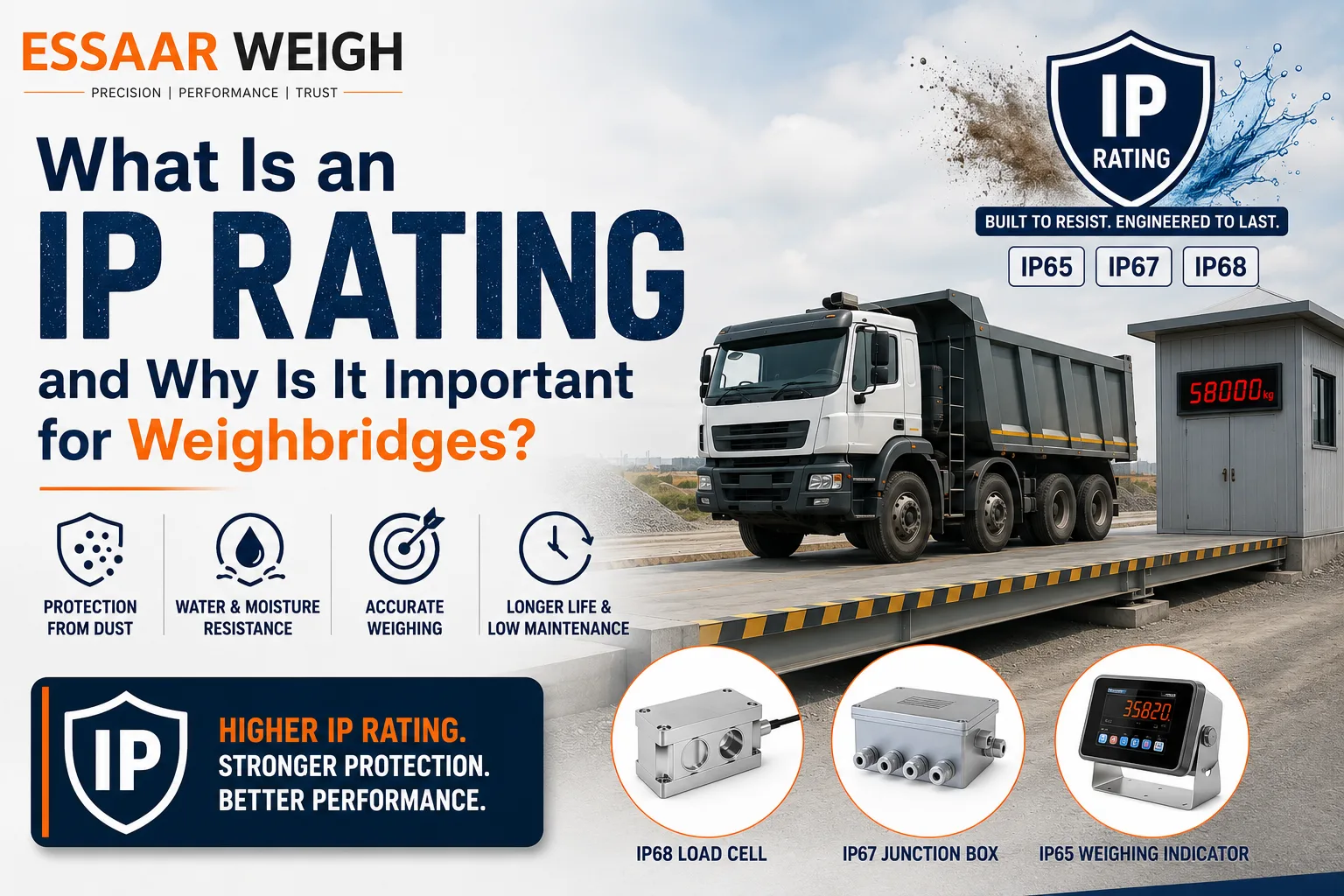
| IP65 | Dust Tight | Water Jets | Weighing indicators, control panels |
| IP67 | Dust Tight | Temporary Water Immersion | Junction boxes, outdoor electronics |
| IP68 | Dust Tight | Continuous Water Immersion | Load cells for weighbridges and harsh industrial environments |
| IP69K | Dust Tight | High-Pressure Hot Water Jets | Heavy-duty industrial and washdown applications |
Why Is IP Rating Important for Weighbridges?
Weighbridge systems are installed and operated outdoors, remaining constantly exposed to rainwater, dust, and other harsh environmental conditions; therefore, considering the system’s IP rating is essential for optimal performance. Selecting components with the correct IP rating ensures that:
- Protection from dust, dirt, and mud
- Resistance to rain, water splashes, and flooding
- Improved weighing accuracy
- Reduced maintenance and repair costs
- Longer service life of electronic components
- Reliable performance in all weather conditions
Common IP Ratings Used in Weighbridges
IP65
Protects against dust and low-pressure water jets. Suitable for general industrial applications.
IP67
Offers complete dust protection and temporary immersion in water. Ideal for outdoor weighbridge installations.
IP68
Provides the highest level of protection against dust and continuous water immersion. Commonly used for premium load cells and harsh industrial environments.
Which Weighbridge Components Require High IP Ratings?
The following weighbridge components should have high IP protection:
- Load Cells
- Junction Boxes
- Weighing Indicators
- Signal Cables and Connectors
- Digital Weighing Electronics
Using high IP-rated components helps maintain weighing accuracy and reduces the risk of equipment failure.
Why Choose Essaar Weigh?
Essaar Weigh manufactures high-quality weighbridges designed for reliable performance in tough industrial conditions. Our weighbridges are equipped with robust, high IP-rated components that deliver accurate weighing, superior durability, and long service life. From electronic load cells to advanced weighing indicators, every component is selected to provide dependable performance while minimizing downtime and maintenance costs.
Conclusion
Considering IP rating is one of the most important factors when selecting a weighbridge. It determines how effectively the system can resist dust and water, directly impacting its accuracy, durability, and lifespan. A higher IP rating protects critical electronic components from dust, moisture, and water exposure, helping maintain weighing accuracy and system reliability. It also extends equipment life, lowers maintenance requirements, and enables smooth operation even in challenging outdoor environments, making it a valuable long-term investment.