Accurate weight and force measurement is a critical requirement across industries such as manufacturing, logistics, construction, agriculture, and automation. For high-capability, high-precision weighing, every reliable system depends on a load cell—a finely engineered device that converts mechanical force into an electrical signal. Choosing the right type of load cell not only improves accuracy but also enhances operational efficiency, ensures safety, and maintains consistency in performance.
As a trusted name in the weighing industry, Essaar Weigh offers a wide range of high-performance load cells designed to meet diverse industrial requirements. In this blog, we will explore the different types of load cells and their applications to help you understand which solution best fits your needs.
Types of Load Cell
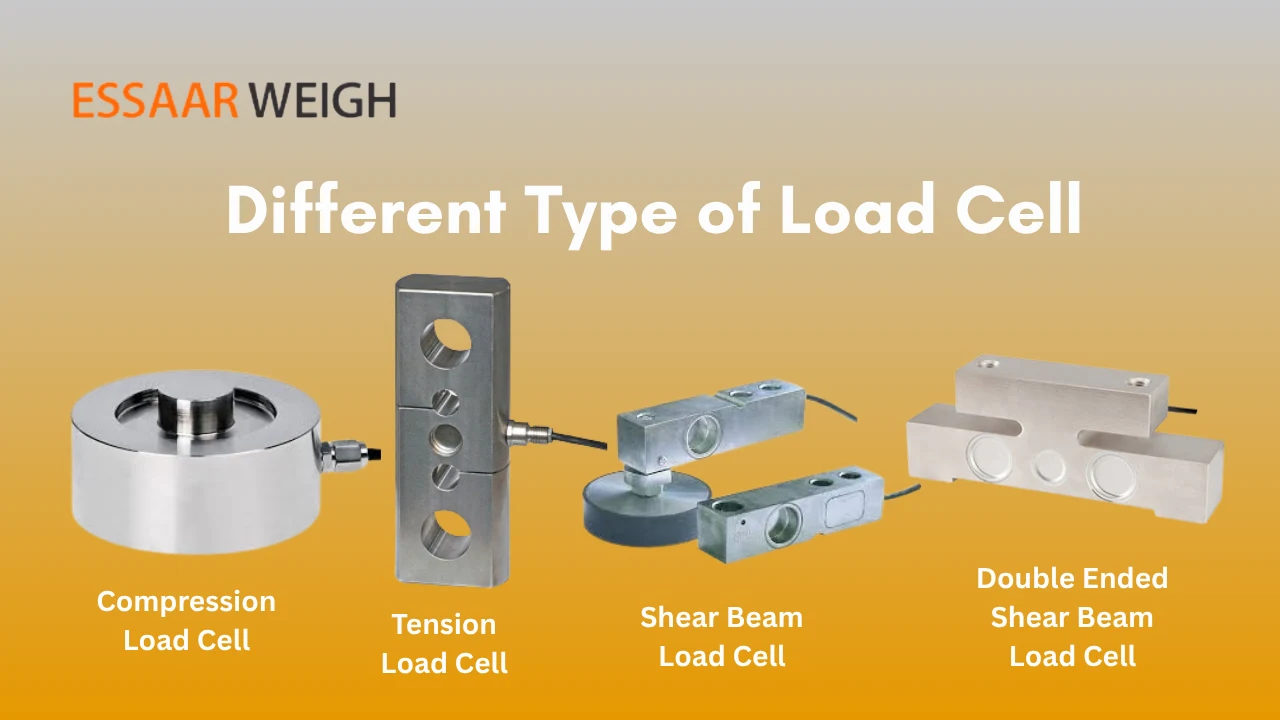
1. Compression Load Cells
Compression load cells are designed to measure force applied in a downward direction, making them ideal for applications where loads are placed directly on top of the sensor. These load cells work by converting the compressive force into an electrical signal using strain gauge technology, ensuring accurate and reliable weight measurement even under heavy loads.
Tension Load Cell
Tension load cells pull or tensile forces, making them ideal for applications where loads are suspended rather than placed on a surface. These Tension load cells are suitable for construction, shipping, and material handling industries. Common applications include crane and hoist load monitoring, suspended weighing systems, cable tension measurement, and lifting equipment safety systems.
Shear Beam Load Cells
Shear beam load cells are among the most widely used load cells in industrial weighing applications due to their high accuracy, durability, and versatility. These load cells work on the principle of measuring shear force generated when a load is applied. The internal strain gauges detect deformation in the beam and convert it into an electrical signal, ensuring precise weight measurement.
Single Points Load Cell
Single point load cells are compact and highly accurate sensors designed for small to medium weighing applications. They are specially built to measure weight accurately even when the load is placed off-center on the platform. These load cells are ideal for commercial and light industrial use where precision and space-saving design are important.
5. Double Ended Shear Beam Load Cells
Double ended shear beam load cells are designed for high-capacity and heavy-duty weighing applications. Unlike single ended designs, these load cells are supported at both ends, with the load applied at the center. This structure allows them to distribute force evenly and deliver highly accurate and stable measurements, even under extremely heavy loads.
Factors to Consider When Choosing a Load Cell
Selecting the right load cell involves understanding your specific application requirements and choosing a manufacturer that can deliver reliable and dependable solutions. Here are some important factors to consider:
- Load Capacity: Ensure the load cell can handle the maximum expected load
- Accuracy Requirements: Choose based on the level of precision needed
- Environmental Conditions: Consider temperature, humidity, and exposure to chemicals
- Mounting and Installation: Ensure compatibility with your system design
- Type of Load: Compression, tension, or both
With expert guidance from Essaar Weigh, helps businesses to easily select the most suitable types of load cells for their operations.
What Makes Essaar Weigh a Trusted Choice?
Essaar Weigh is well known for delivering high-quality and reliable weighing solutions tailored to diverse industrial needs. Our load cells are manufactured using advanced technology and strict quality standards, ensuring accuracy, durability, and long-term performance.
With a wide product range, they cater to applications from small-scale systems to heavy-duty industrial operations. Our company also offers customized solutions, allowing businesses to get products that perfectly match their requirements.
Conclusion
Load cells are essential components in modern weighing and force measurement systems. From small retail scales to massive industrial weighbridges, the right type of load cell plays a crucial role in ensuring accuracy, safety, and efficiency.
Understanding about the different types of load cells and their applications helps industries to make informed decisions and optimize their operations. Whether you need a solution for industrial automation, logistics, or research, choosing a trusted manufacturer is key.
With its commitment to innovation and quality, Essaar Weigh continues to be a preferred choice for reliable load cell solutions across industries.