Accurate weight measurement is essential in many industries including manufacturing, logistics, agriculture, retail, laboratories, and healthcare. Weighing scales help businesses maintain accuracy, improve operational efficiency, and ensure compliance with regulatory standards. With the advancement of technology, modern electronic weighing scales provide precise, fast, and reliable measurements for a wide range of applications.
In this blog, we will explore the different types of weighing scales, their functions, and where they are commonly used.
What is a Weighing Scale?
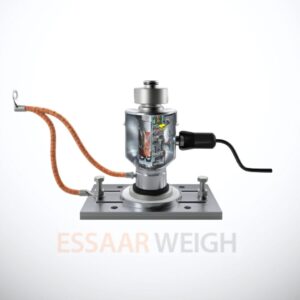
A weighing scale is a device used to measure the weight or mass of an object. Modern electronic scales use sensors called load cells that convert the force of weight into an electrical signal, which is then displayed digitally for accurate readings.
Electronic weighing scales are widely used because they provide high accuracy, quick readings, and easy operation compared to traditional mechanical scales.
Types of Weighing Machine
1. Platform Weighing Scales
Platform scales are one of the most commonly used industrial weighing machines. They consist of a flat platform where heavy objects such as boxes, bags, pallets, and containers can be placed.
Key Features
- Large weighing platform
- High load capacity
- Digital display for easy reading
- Durable structure for industrial use
Applications
- Warehouses
- Logistics companies
- Manufacturing units
- Shipping and packaging industries
Platform scales are ideal for weighing bulky or heavy items and are widely used in industrial operations.
2. Bench Weighing Scales
Bench scales are compact and versatile weighing machines designed for smaller items. These scales are usually placed on a workbench or table and are commonly used in laboratories, food processing units, and small industrial setups.
Key Features
- Compact design
- High precision
- Easy to move and install
- Digital weight display
Applications
- Food processing industries
- Pharmaceutical companies
- Packaging units
- Laboratories
Bench scales provide reliable and accurate measurements for smaller loads and are popular in many commercial environments.
3. Hanging Scales
Hanging scales measure weight by suspending the object from a hook attached to the scale. These scales are useful when items cannot be placed on a flat surface.
Key Features
- Portable and easy to use
- Suitable for irregular-shaped objects
- Strong hook mechanism
- Digital display in modern models
Applications
- Agriculture
- Fishing industries
- Meat markets
- Produce markets
Hanging scales are widely used in agricultural markets where goods are often weighed using hooks or chains.
4. Retail Weighing Scales
Retail scales are commonly used in grocery stores, supermarkets, and retail shops. These scales not only measure weight but also calculate the price based on the unit cost of the product.
Key Features
- Weight and price calculation
- Customer and operator display
- Barcode and label printing
- High accuracy for trade applications
Applications
- Supermarkets
- Vegetable markets
- Bakery shops
- Meat and seafood stores
Retail scales help businesses ensure accurate billing and efficient customer service.
5. Analytical and Precision Balances
Analytical balances are highly accurate weighing devices used in laboratories and research facilities. These scales are capable of measuring extremely small weights with very high precision.
Key Features
- Extremely accurate measurements
- Advanced digital technology
- Protection against air movement and vibration
- Sensitive weighing sensors
Applications
- Scientific research
- Pharmaceutical testing
- Chemical laboratories
- Educational institutions
These balances are essential in industries where even a small measurement error can affect results.
6. Crane Scales
Crane scales are heavy-duty weighing devices designed for weighing extremely large loads. They are usually suspended from cranes or lifting equipment.
Key Features
- Very high load capacity
- Strong metal construction
- Remote display and wireless options
- Suitable for harsh environments
Applications
- Construction sites
- Steel industries
- Shipping ports
- Heavy manufacturing plants
Crane scales help industries measure large loads safely and efficiently.
7. Weighbridge (Truck Scale)
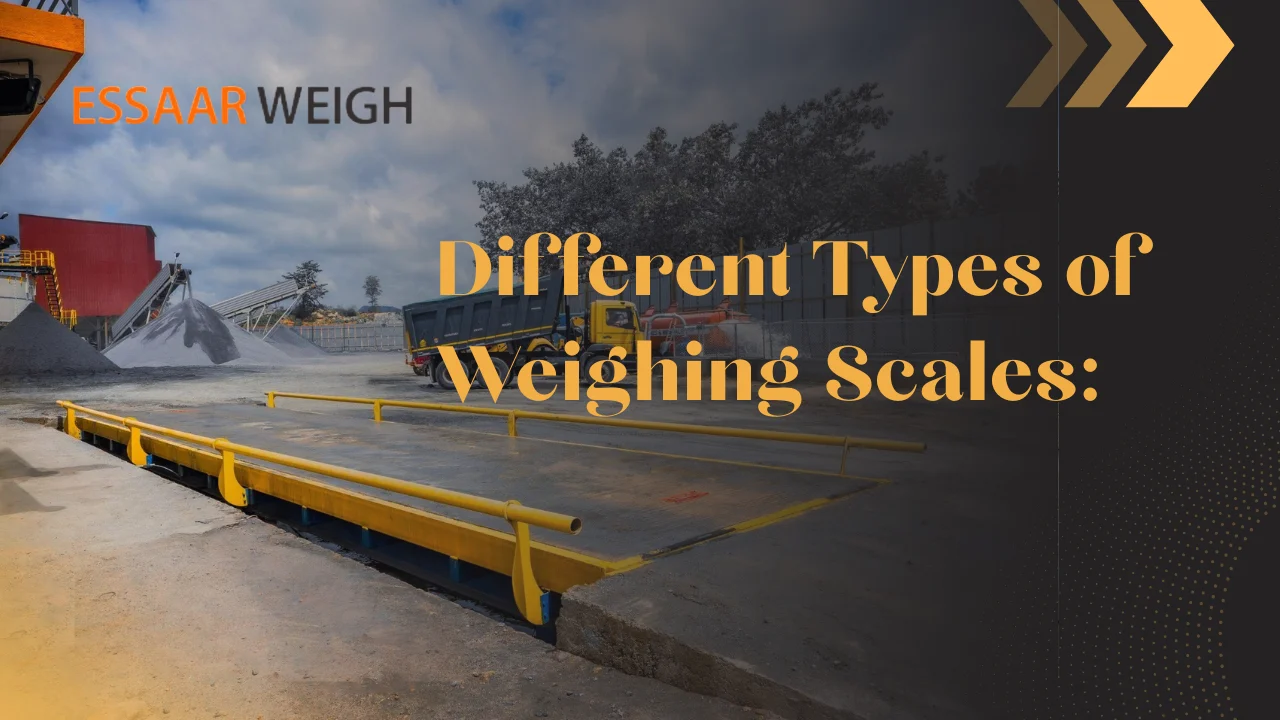
A weighbridge, also known as a truck scale, is used to weigh entire vehicles along with their cargo. These large weighing systems are commonly installed at factories, mining sites, warehouses, and logistics hubs.
Key Features
- Heavy-duty platform for trucks
- High load capacity (up to hundreds of tons)
- Digital indicators and software integration
- Accurate vehicle weight measurement
Applications
- Mining industries
- Cement plants
- Agriculture processing units
- Logistics and transportation companies
Weighbridges play a crucial role in monitoring vehicle loads, preventing overloading, and maintaining transparency in goods transportation.
Importance of Choosing the Right Weighing Scale
Selecting the appropriate weighing scale is important for improving efficiency and accuracy in business operations. Different industries require different types of weighing equipment depending on their needs.
Benefits of Modern Electronic Scales
- High precision measurement
- Faster results
- Reduced human error
- Digital data management
- Improved productivity
Electronic scales also offer automation features that minimize manual errors and increase operational efficiency.
Essaar Weigh – Leading Weighbridge Manufacturer
When it comes to high-quality weighing solutions, Essaar Weigh has established itself as a trusted name in the industry. We are recognized as a leading weighbridge manufacturer, providing advanced electronic weighing systems for various industrial applications.
We specialize in designing and manufacturing durable and high-precision weighbridges that meet the needs of industries such as logistics, mining, agriculture, manufacturing, and transportation. Our weighing systems are known for:
- Robust construction
- High accuracy
- Long service life
- Advanced digital technology
- Reliable performance in demanding environments
With years of industry expertise, Essaar Weigh continues to deliver innovative weighing solutions that help businesses maintain efficiency, transparency, and operational control.
Conclusion
Weighing scales play a critical role in modern industries by ensuring accurate measurement of goods and materials. From small laboratory balances to large weighbridges used for trucks, each type of weighing scale serves a specific purpose.
Understanding the different types of weighing scales helps businesses choose the right equipment for their operational needs. Whether it is a platform scale for warehouses, a retail scale for supermarkets, or a weighbridge for heavy vehicles, selecting the right system improves productivity and accuracy.
With advanced technology and reliable solutions from companies like Essaar Weigh, industries can achieve precise and efficient weight measurement for better business operations.